Trend Summary | Global Affairs | March 2026
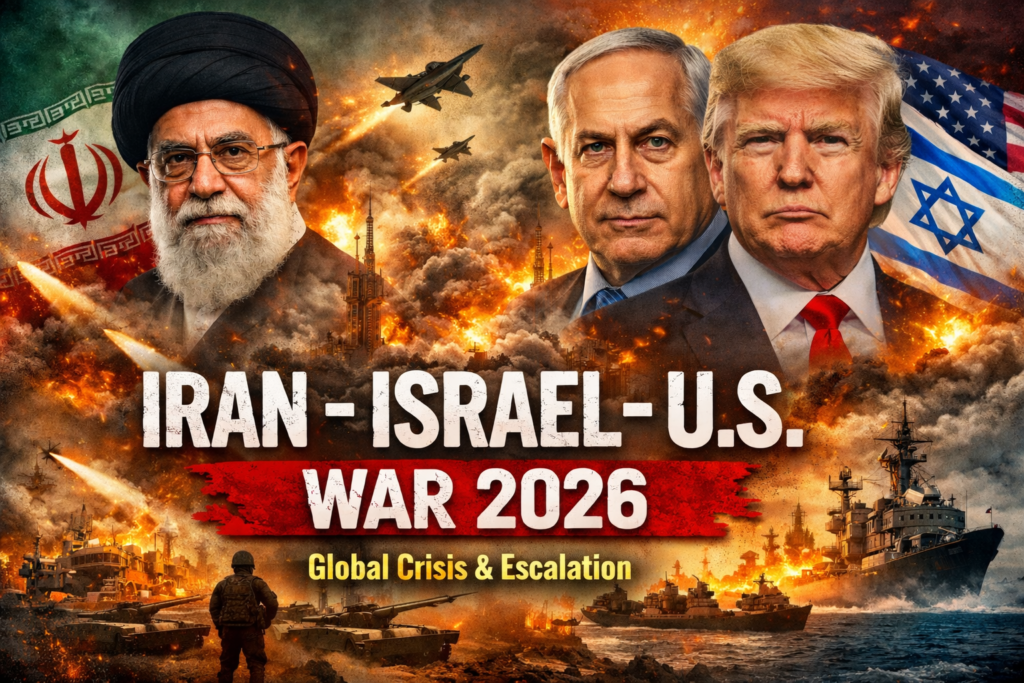
The Middle East has entered one of its most dangerous phases in decades. A direct military confrontation involving Iran, Israel, and the United States has rapidly escalated into a regional crisis affecting global oil markets, international security, and economic stability worldwide.
Here is a complete, easy-to-understand breakdown of why the war began, what has happened till 3 March 2026, which leaders were killed, which countries Iran targeted, and how this conflict is impacting the world — including India.
Why the Iran–Israel–US War Started
The current war did not begin overnight. It is the result of years of rising geopolitical tensions centered around three major issues:
1. Iran’s Nuclear Program
The United States and Israel have long accused Iran of attempting to develop nuclear weapons. Iran insists its nuclear activities are for peaceful energy purposes. Diplomatic negotiations failed repeatedly between 2023 and 2025, increasing mistrust.
Israel considers a nuclear-armed Iran an existential threat, which became the primary justification for military action.
2. Iran’s Support for Anti-Israel Armed Groups
Iran provides political, financial, and military support to regional groups such as Hezbollah and Hamas. Israel and the US claim these groups have conducted attacks against Israeli interests and Western allies across the Middle East.
3. Long-Standing Regional Rivalry
Iran and Israel have remained strategic enemies for decades, while the United States is Israel’s strongest military ally. Previous conflicts and proxy wars gradually pushed the region toward direct confrontation.
The Turning Point: February 28, 2026
On 28 February 2026, joint US–Israel airstrikes targeted Iranian military and nuclear facilities.
Main Targets:
- Nuclear infrastructure
- Missile bases
- Military command centers
- Senior leadership compounds
The strikes marked the first large-scale direct attack inside Iran involving both countries.
Leaders and Family Members Killed
Iran’s Supreme Leader Killed
Ayatollah Ali Khamenei, Iran’s Supreme Leader, was killed during the strikes in Tehran.
Reports confirmed additional casualties among his close family:
- His wife, Mansoureh Khojasteh Bagherzadeh, died from injuries sustained during the attack.
- Several close relatives, including extended family members, were also reported killed.
- Multiple senior commanders of the Islamic Revolutionary Guard Corps (IRGC) were eliminated in the same operation.
Analysts described the strike as a “leadership decapitation operation” aimed at weakening Iran’s command structure.
🔥 Iran’s Retaliation: War Expands Across the Middle East
Following the attack, Iran launched large-scale retaliation using missiles, drones, and proxy forces.
By 3 March 2026, the conflict had expanded beyond Iran and Israel into multiple countries.
Countries Iran Has Targeted (Till March 3, 2026)
Iran stated its attacks were directed at countries supporting US military operations.
Israel — Direct Retaliation
- Missile and drone strikes on military bases and cities.
- Primary target due to direct involvement in strikes.
Saudi Arabia
Reason: Presence of US facilities and strategic oil infrastructure.
Targets included:
- Areas near diplomatic zones
- Energy infrastructure sites
Kuwait
Reason: Hosts American military bases.
Targets:
- US installations
- Airport and logistics areas
Qatar
Reason: Location of a major US Central Command airbase.
Targets:
- Military-linked infrastructure
- Energy facilities
United Arab Emirates
Reason: Strategic US partner.
Targets:
- Airports
- Infrastructure hubs in Abu Dhabi and Dubai regions
Bahrain
Reason: Headquarters of the US Navy’s Fifth Fleet.
Targets:
- Naval facilities
- Military zones
Iraq
Reason: US bases operating inside Iraqi territory.
Missiles were intercepted over Iraqi airspace.
Jordan
Reason: Western military coordination support.
Air defense systems intercepted incoming threats.
Lebanon (Indirect Battlefield)
Iran-backed Hezbollah forces engaged Israel, opening another front.
Oman (Limited Incident)
Drone activity reported near strategic port zones.
Why Iran Targeted These Countries
Iran’s strategy follows four main objectives:
- Attack US Military Network
Countries hosting American bases were viewed as operational partners. - Economic Pressure Through Energy Disruption
Strikes near oil and shipping infrastructure aimed to impact global markets. - Deterrence Messaging
Iran warned regional governments against assisting US or Israeli operations. - Domestic Stability
After losing its Supreme Leader, Iran needed a strong response to maintain internal political control.
Global Impact of the War
Oil Prices and Energy Crisis
The Strait of Hormuz — responsible for nearly one-fifth of global oil supply — faces disruption risks. Oil prices surged amid fears of shipping blockades.
Air Travel Disruptions
Airlines suspended flights across large parts of the Middle East due to missile threats and airspace closures.
Economic Uncertainty
- Stock markets became volatile.
- Shipping costs increased.
- Inflation risks rose globally.
Cyber Warfare
Reports indicate cyberattacks and internet shutdowns across parts of Iran, signaling a digital warfare dimension.
How the Conflict Impacts India
India faces significant indirect consequences:
Energy Dependence
India imports large quantities of oil from Gulf nations. Rising crude prices may increase petrol and diesel costs domestically.
Indian Workforce Abroad
Millions of Indian workers live across Gulf countries now affected by heightened security risks.
Trade and Shipping
Disruptions in Gulf shipping lanes could increase import costs and pressure supply chains.
Economic Effects
Higher oil prices may influence inflation, currency stability, and stock market performance.
Conflict Status as of 3 March 2026
- Hundreds killed across multiple countries.
- Nearly 800 reported casualties inside Iran.
- Diplomatic evacuations underway.
- Regional airspace restrictions active.
- Risk of wider escalation remains high.
Final thought
The 2026 Iran–Israel–US war represents a major turning point in global geopolitics.
- US and Israel launched strikes targeting Iran’s nuclear and military leadership.
- Iran’s Supreme Leader and senior commanders were killed.
- Iran retaliated across multiple Middle Eastern countries hosting US forces.
- The conflict expanded into a regional crisis affecting energy markets and global stability.
- Economic and security impacts are already being felt worldwide, including in India.
The coming weeks will determine whether the conflict stabilizes through diplomacy or escalates into a broader international confrontation.
The Team Trendsummary