
TrendSummary brings you the perspective no one else talks about
Tensions in the Middle East have intensified after Bahrain accused Iran of launching a drone attack on a key water desalination facility, while Iran simultaneously alleged that the United States attacked a desalination plant on Iran’s Qeshm Island. The conflicting claims have raised serious concerns about the safety of critical water infrastructure in the Gulf region, where millions depend on desalination plants for daily drinking water.
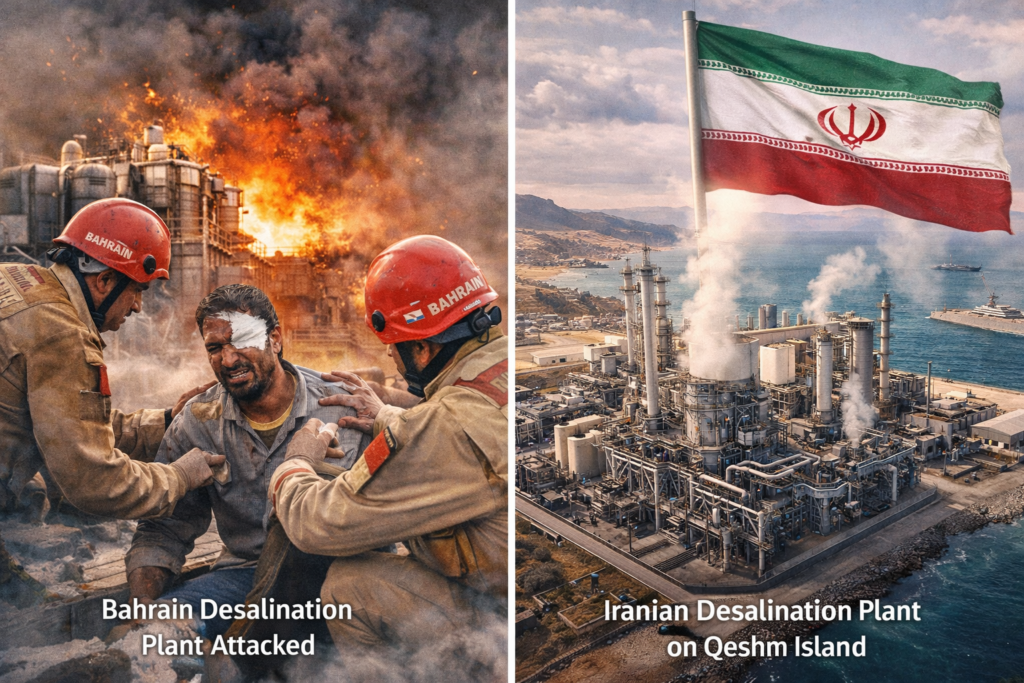
Drone Attack on Bahrain’s Desalination Plant
Bahrain’s Interior Ministry stated that a “retaliatory Iranian drone” targeted and damaged a water desalination plant, calling it a direct attack on civilian infrastructure.
Officials described the strike as:
“Iranian aggression that indiscriminately attacked civilian targets.”
According to preliminary reports:
- 1 desalination plant in Bahrain was damaged
- At least 3 people were injured
- Emergency teams were deployed to assess the damage and stabilize water supply operations
Authorities have not yet disclosed the exact level of damage to the plant, but experts warn that even partial disruption could affect water distribution across parts of the country.
Iran Accuses the U.S. of Attacking Its Own Water Facility
In response, Iranian Foreign Minister Abbas Araghchi accused the United States of attacking a desalination facility on Qeshm Island, located in the strategic Strait of Hormuz.
Araghchi said on the social media platform X:
“The U.S. set this precedent, not Iran.”
Iran claimed that the alleged strike disrupted water supply for around 30 villages on the island.
However, U.S. Central Command (CENTCOM) — which oversees American military operations in the Middle East — quickly denied the allegation, stating that U.S. forces had not targeted any Iranian desalination facility.
Why Desalination Plants Are Critical in the Gulf
The situation is particularly alarming because the Middle East relies heavily on desalination plants to produce drinking water.
Key facts:
- The Middle East has over 400 desalination plants
- The region produces about 40% of the world’s desalinated water
- Gulf countries account for around 60% of global desalination capacity
Dependence on desalinated water for drinking supply:
- Kuwait: about 90%
- Oman: about 86%
- Saudi Arabia: about 70%
- Bahrain and Qatar: nearly 90% or more
Because natural freshwater resources are extremely limited in these desert countries, desalination plants are essential for survival.
What Happens If Water Infrastructure Is Targeted?
Experts warn that attacks on desalination plants could trigger a serious humanitarian crisis in the region.
1. Immediate Water Shortages
If major desalination plants stop operating:
- Cities could lose drinking water within days
- Hospitals, power plants, and industries could face operational disruptions
- Governments may have to rely on emergency water imports
Small Gulf nations like Bahrain and Kuwait are especially vulnerable due to limited freshwater reserves.
2. Panic and Social Instability
Water shortages can quickly lead to:
- Panic buying of bottled water
- Public unrest and protests
- Pressure on governments to secure alternative water sources
In desert environments, water shortages can escalate faster than fuel or food shortages.
3. Economic Impact
Desalinated water supports several sectors, including:
- Tourism
- Construction
- Energy production
- Industrial manufacturing
A disruption could halt economic activity across major cities, affecting jobs and infrastructure projects.
4. Risk of International Escalation
Attacks on civilian infrastructure such as water facilities could be considered violations of international humanitarian law.
If confirmed, such strikes could:
- Trigger military retaliation
- Draw regional allies into the conflict
- Increase the risk of a broader Middle East confrontation
Could This Become a “Water War”?
Security analysts warn that water infrastructure may become a strategic target in modern warfare, especially in regions where water is scarce.
Possible threats include:
- Drone attacks on desalination plants
- Cyberattacks targeting water management systems
- Naval operations disrupting seawater intake facilities
If the current tensions escalate, the Middle East could face not only an energy crisis but also a severe water security crisis.
Final Analysis
In the Gulf region, oil powers the economy, but desalinated water sustains life.
The recent accusations between Bahrain, Iran, and the United States highlight how critical infrastructure like desalination plants could become the next frontline in geopolitical conflicts.
If attacks on water facilities continue, millions of civilians across the Gulf could face serious water shortages, making this development one of the most alarming risks emerging from the current regional tensions.
The Team Trendsummary